What Is Hazardous Duty Incentive Pay (HDIP)?
Hazardous Duty Incentive Pay compensates military service members who regularly perform dangerous duties as part of their job requirements. From parachute jumpers to explosive ordnance disposal technicians, these special pays recognize the elevated risks certain military occupations carry. In 2025, HDIP rates range from $150 to $250 per month depending on the type of hazardous duty performed.
Types of Hazardous Duty Pay
The Department of Defense authorizes HDIP for numerous categories of hazardous duty. Here are the primary types and their 2025 monthly rates:

Parachute Duty – $150/month
Service members who perform frequent and regular parachute jumping as part of military operations or training qualify for parachute duty HDIP. This includes:
- Airborne infantry and special operations forces
- Parachute riggers who perform jump duties
- Personnel in jump-qualified billets requiring regular jumps
- Minimum jump requirements vary by service (typically 1 jump per 3 months)
High-Altitude Low Opening (HALO) Duty – $225/month
Military free-fall parachutists who perform HALO/HAHO jumps receive enhanced HDIP rates. These jumps involve exiting aircraft at extreme altitudes (often 25,000+ feet) and deploying parachutes at low altitude, requiring specialized equipment and extensive training.
Demolition Duty – $150/month
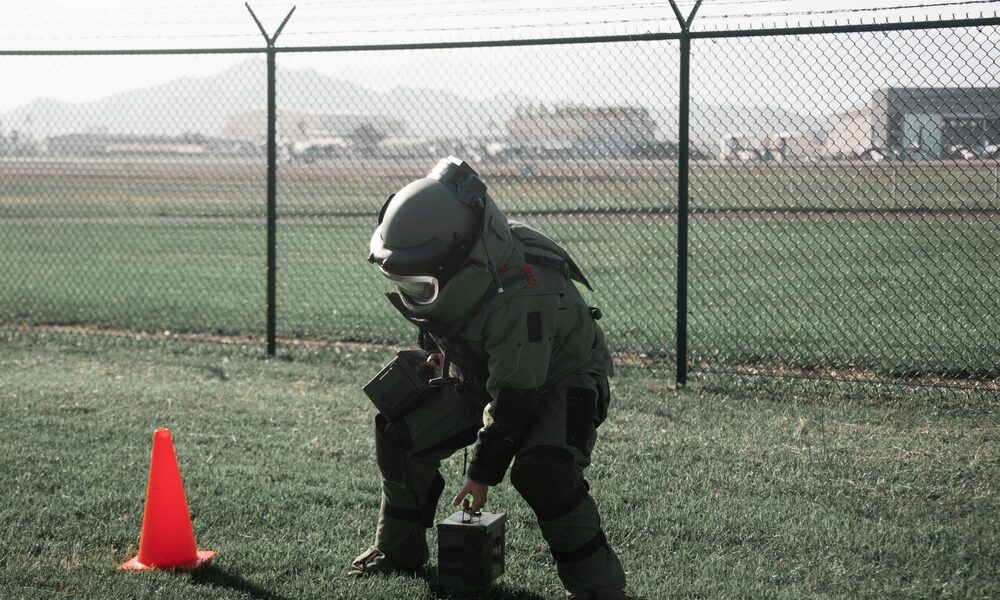
Explosive Ordnance Disposal (EOD) specialists and select combat engineers who work with explosives and demolitions qualify for this HDIP. Eligible personnel include:

- EOD technicians (all services)
- Combat engineers with demolition specialty codes
- Personnel whose primary duty involves handling explosives
- Those involved in render-safe procedures on unexploded ordnance
Flight Deck Duty – $150/month
Personnel assigned to work on aircraft carrier flight decks face extreme hazards from jet blast, moving aircraft, and ordnance handling. Eligible ratings include:
- Aviation Boatswain’s Mates (ABE, ABF, ABH)
- Aircraft handlers and directors
- Flight deck firefighters and crash crews
- Ordnance handlers working on the flight deck
Experimental Stress Duty – $150/month
Service members who volunteer as human test subjects for experiments involving physiological stress qualify for HDIP. This includes studies involving:
- Acceleration and deceleration forces
- Extreme thermal conditions (heat/cold)
- Altitude chamber testing
- Other approved stress research programs
Toxic Fuels and Pesticides Duty – $150/month
Personnel who handle highly toxic fuels, propellants, or chemical agents as a primary duty may qualify. This includes work with:
- Hypergolic rocket fuels
- Certain chemical warfare agent testing/disposal
- Designated toxic fuel handling operations
Flying Duty HDIP (Non-Crew)
Service members who fly regularly but are not rated aircrew can receive flying HDIP:
- Aircrew members: Up to $250/month
- Non-aircrew members: $150/month
HDIP Eligibility Requirements
To receive Hazardous Duty Incentive Pay, service members must:
- Be assigned by competent orders to a duty requiring performance of hazardous duties
- Meet minimum performance requirements (e.g., required number of jumps, hours on flight deck)
- Be current and qualified in the hazardous duty specialty
- Actually perform the hazardous duty during the pay period (with some exceptions for operational necessity)
Multiple Hazardous Duties
Service members who qualify for more than one type of hazardous duty pay may receive up to two types of HDIP simultaneously. For example, an EOD technician who also performs parachute duty could receive both demolition HDIP ($150) and parachute HDIP ($150) for a total of $300/month.
How HDIP Is Calculated
HDIP is paid monthly and prorated for partial months of qualifying duty. Key points:
- Pay begins on the date hazardous duty orders become effective
- Pay continues as long as duty requirements are met
- Temporary breaks in hazardous duty may not interrupt pay (depending on circumstances)
- HDIP is separate from and in addition to other special pays
Tax Treatment of Hazardous Duty Pay
Hazardous Duty Incentive Pay is normally taxable income subject to federal and state income taxes. However, HDIP earned while performing hazardous duties in a designated Combat Zone may be excluded from taxable income under the Combat Zone Tax Exclusion (CZTE).
Common HDIP Questions
Does HDIP count toward retirement?
Yes, HDIP is included in “basic pay” for purposes of retirement calculations under the Blended Retirement System (BRS) and legacy High-3 retirement system.
Can I lose HDIP if I’m injured?
Generally, HDIP continues during periods of hospitalization or convalescence if the injury occurred while performing hazardous duty. However, if you’re permanently unable to perform the hazardous duty, HDIP will eventually stop.
Is HDIP paid during deployments?
Yes, HDIP continues during deployments as long as you remain in a hazardous duty status. In fact, combining HDIP with combat zone tax exclusion and other deployment pays can significantly increase take-home pay.
Verifying Your HDIP
To ensure you’re receiving correct Hazardous Duty Incentive Pay:
- Check your LES for the appropriate HDIP entitlement code
- Verify your hazardous duty orders are current
- Confirm you’ve met minimum performance requirements (jumps, flight deck hours, etc.)
- Contact your unit finance office if HDIP is missing or incorrect
Resources
- DFAS Hazardous Duty Pay Tables
- DoD HDIP Information
- Your service branch personnel command for eligibility questions




Leave a Reply