
Military pay has gotten messy with all the misinformation flying around — especially when it comes to BAS. As someone who’s spent years digging through LES statements and military pay tables, I taught myself the working side of Basic Allowance for Subsistence. Today, I will share it all with you.
The 2025 Enlisted BAS Rate Is $460.25 — Here Is What Changed
Short answer: nothing changed. The 2025 enlisted BAS rate is $460.25 per month. Same as 2024. Same as 2023. Zero percent adjustment year-over-year, which means zero extra dollars in your pocket compared to last year.
But what is BAS? In essence, it’s a monthly food allowance the military pays every active-duty enlisted member regardless of rank. But it’s much more than that — it’s a non-taxable entitlement tied to federal food cost indexes, and understanding how it actually lands in your account is where most people get tripped up.
Officers get a different rate, for the record. In 2025, that number is $280.56 per month. Lower dollar amount, higher rank. That’s the military in a nutshell.
Worth saying out loud. Most people searching “2025 enlisted BAS 460.25” want one thing: to know whether their paycheck is getting bigger. It isn’t. The rate landed where it landed and stayed there.
Why hasn’t it moved? The statute governing BAS ties the rate to the USDA food cost index — specifically their moderate-cost meal plan calculation. Nothing to do with rank or seniority. It’s just: what does it cost to feed a person? When that number doesn’t shift enough to trigger an adjustment, Congress doesn’t touch it. That’s what happened between 2024 and 2025. Food costs didn’t move the needle.
Still, $460.25 times twelve months is $5,523 per year. Run that out five years and you’re looking at $27,615 in raw BAS entitlements. Real money — especially because none of it gets taxed.
How BAS Shows Up on Your LES
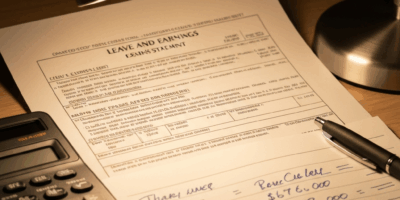
Open your Leave and Earnings Statement. Go straight to the entitlements section near the top, before the deductions column. You’ll see “BAH” as its own line. You’ll see “BAS” as its own line. For every active-duty enlisted member in 2025, that BAS line should read $460.25.
Here’s where the confusion starts. You see $460.25 listed, but your direct deposit doesn’t seem to reflect it. Three reasons — and they stack sometimes.
First: the meal card deduction. If you live in the barracks and eat at the DFAC, the military charges you for those meals. That charge hits directly against your BAS entitlement. The 2025 official meal card rate varies by branch — historically it runs somewhere between $330 and $375 monthly. Do the math: $460.25 minus a $370 meal card charge leaves you roughly $90 in net BAS. That $90 might show as a lump sum on one pay period, or it might disappear into the rounding and netting and look invisible.
Second: BAS is non-taxable. It doesn’t appear in your taxable income section, doesn’t reduce your withholding, doesn’t show up the way base pay does. That’s genuinely good news for your effective purchasing power — but it means the LES and your direct deposit won’t line up cleanly at first glance.
Third: timing. Some months show the full credit. Some show deductions first. The structure shifts by pay cycle and installation. Move between duty stations mid-month, or change your meal status, and the prorations get strange fast. Spare yourself the wrong turn I took of assuming the first weird-looking LES was an error — sometimes it’s just a mid-month status change catching up to the system.
To find your real number: open the “Deductions” section of your LES, locate “Meal Card,” and subtract it from $460.25. What’s left is what’s actually hitting your account.
Who Qualifies for Full Enlisted BAS in 2025
Every active-duty enlisted member gets BAS. All ranks. All six branches — Army, Navy, Air Force, Marines, Coast Guard, Space Force. The $460.25 baseline applies across the board.
But “receives” and “keeps” are different things. You hold onto the full amount only when no government meal is being provided to you. That happens in three main situations:
- Field duty or forward deployment: You’re operating somewhere without DFAC access — a combat zone, a field exercise, a remote installation. Full BAS applies because you’re feeding yourself.
- Off-post housing: You live outside the gate. You’re not eating in a military dining facility. Full BAS, usually paired with BAH. Common for junior enlisted who’ve earned housing allowance eligibility, or for senior enlisted with families off-base.
- Barracks without a DFAC: Uncommon, but it happens. Some installations don’t run a dining facility for a given barracks building. Full BAS covers your meal costs in that case.
That’s what makes BAS endearing to us enlisted members — it’s yours the moment the government stops handing you a tray.
Reservists and National Guard members work differently. No monthly BAS. Instead, you earn it pro-rated against days of active duty or duty for training. The daily rate works out to $460.25 divided by 30 — call it $15.34 per day. Two weeks of annual training equals 14 days, which equals roughly $215 in BAS for that period. It’ll appear on your pay voucher after drill or training wraps up.
And don’t mix up BAS with BAH. Separate allowances, separate purposes. BAS is food. BAH is housing. You can have one without the other depending on your status.
BAS During Deployment and Special Duty Assignments
Deployment is where BAS gets complicated. Say you’re on a ship or at a forward operating base where the DFAC is always running — three meals a day, no charge, government-provided. Does BAS still pay out?
Yes. But it may be reduced. You might see “BAS with meals” on your deployment orders, meaning your $460.25 is offset downward because the government is already covering food. The deduction typically reflects the value of those three daily government-provided meals.
Flip the scenario — you’re deployed to a small advisory team or a special operations post with no DFAC in sight. Your orders will reflect “BAS without meals” or just “full BAS.” You get the entire $460.25 to source your own food, however that looks in-country.
TDY is where people constantly get confused. You’re on per diem, eating on your own, staying at a hotel or rental. Does BAS still pay? Yes. BAS and per diem are not mutually exclusive. You’re still enlisted active duty — BAS applies. You’re temporarily away from your home duty station — per diem applies. Both hit your pay. I’m apparently someone who had to have this explained twice before it clicked, and a finance sergeant who drew it out on a whiteboard finally made it work for me.
As of 2025, no new deployment policy changes have been announced that affect BAS. If your service branch pushed out updated guidance, go straight to your finance office or your service’s official pay website — not last year’s blog post.
How to Use BAS When Building Your Military Budget
So, without further ado, let’s dive in on the actual numbers. You’re an E-4 — Specialist, Corporal, Petty Officer Third Class, pick your branch. Base pay in 2025 runs roughly $2,749 per month before taxes. Stack $460.25 in BAS on top. Gross monthly entitlements: $3,209.25.
Now the tax math. That $460.25 is non-taxable — no federal income tax, no FICA, and in most states, no state income tax either. If you’re sitting in the 22 percent marginal bracket, you’d normally owe about $101 on that amount if it were taxable income. You don’t. The real purchasing power of BAS is effectively closer to $589 in pre-tax equivalent. That gap matters when you’re building a budget.
While you won’t need a financial advisor for this, you will need a handful of solid habits. First, you should treat your BAS as earmarked grocery money — at least if you live off-post and actually control your food spending. I’m apparently someone who spent two years just letting it dissolve into general expenses and never tracking where it went. Side-step the error I made.
BAS might be the best budget anchor you have, as military financial planning requires a clear separation between allowances and spendable income. That is because your taxable base pay is what actually matters for things like TSP contributions, loan calculations, and retirement — BAS doesn’t count toward retired pay at all. Retirement is calculated on base pay only: 20 years times 2.5 percent times your highest-36-month average base pay. Allowances don’t factor in. If you’re thinking career-track, plan accordingly.
One more thing — you can’t direct BAS via allotment. It’s not a separate bucket you can route to a savings account or send to a creditor. It comes in with your pay and sits there. Budget around it deliberately.
For official 2025 pay tables, cross-reference with the Defense Finance and Accounting Service website or your service’s personnel command page. Pull your LES and check it against the published numbers. If something doesn’t match — go to your finance office immediately. That was 1996 advice that still applies in 2025.



Leave a Reply