Do All Military Branches Allow Leave Sell Back
Military leave sell-back rules have gotten complicated with all the policy variations flying around. The short answer: no — not every branch lets you cash out unused leave. As someone who’s reviewed separation paperwork for dozens of service members, I learned pretty quickly that this catches people off guard. Sometimes way too late. That’s a costly surprise when you’re counting on that final payout.
Here’s the breakdown by branch:
- Army: Allows sell-back up to 60 days of accrued leave
- Navy: No leave sell-back. Period. Unused leave disappears upon separation
- Air Force: Allows sell-back up to 75 days of unused leave
- Marines: No leave sell-back for separating Marines
- Space Force: Allows sell-back up to 75 days (carries over Air Force policy)
- Coast Guard: Allows sell-back up to 60 days of accrued leave
- National Guard: Varies by state — federal policy permits up to 60 days
Navy sailors ask me this constantly. Why is their branch the exception? The policy traces back to Navy culture around permanent change of station cycles and how they handle terminal leave. If you’re Navy and didn’t catch this, check your separation counseling paperwork — it should spell it out clearly.
Probably should have opened with this, honestly. Too many separating personnel waste weeks submitting sell-back requests only to learn their branch doesn’t permit it. Before anything else, check your branch’s official leave policy. Your servicing human resources office or separation officer should have the authoritative document sitting right there.
How to Calculate Your Leave Sell Back Payout
The formula is straightforward, but only if you know your exact daily rate.
Here’s the math:
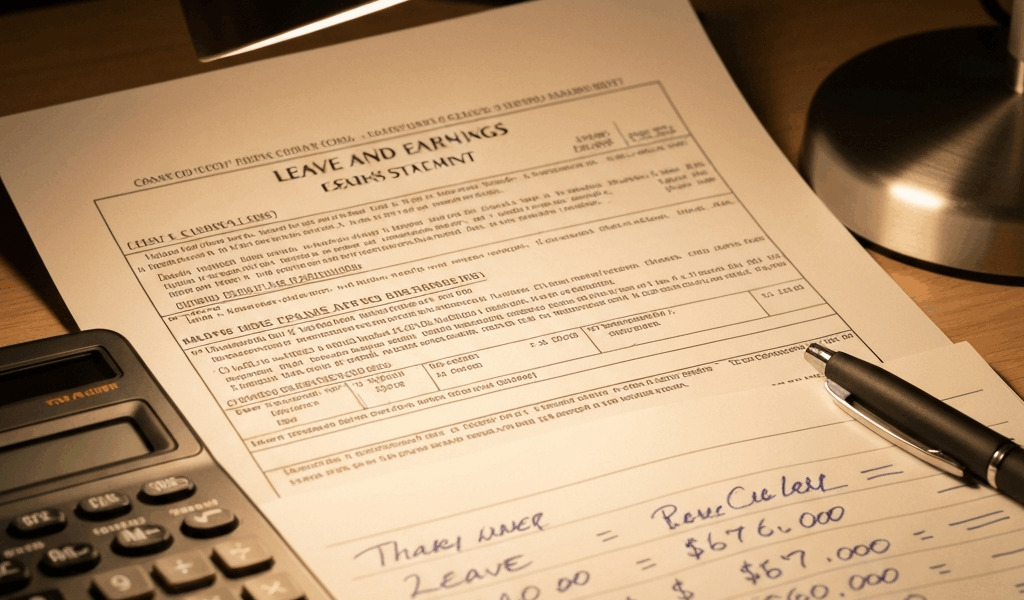
- Find your monthly base pay (from your Leave and Earnings Statement, Line 1)
- Divide by 30 to get your daily rate
- Multiply the daily rate by the number of approved leave days you’re selling back
- That’s your gross before federal and state withholding
Let me walk through an actual example I encountered. An E-5 separated with monthly base pay of $2,457. Her daily rate came out to $2,457 ÷ 30 = $81.90 per day. She got approved to sell back 50 days. The gross payout: 50 × $81.90 = $4,095 before taxes.
That $4,095 gets hit with federal income tax withholding, Social Security at 6.2%, and Medicare at 1.45% — just like regular pay. Your state income tax applies depending on where you lived on your separation date. She ended up with roughly $3,150 after withholding instead of that full $4,095.
Here’s a mistake I made early on: I assumed the payout would be completely separate from regular income. It’s not. Your leave sell-back gets treated as ordinary wages during your final pay period, stacking right on top of your last regular paycheck. If you were planning to drop into a lower tax bracket during separation month, this might push you back up. Run those numbers if you’re anywhere close to a bracket edge.
One more detail: the Air Force and Space Force use base pay ÷ 30, while the Army calculates it as base pay × 12 ÷ 365. The difference is minimal — we’re talking maybe a few dollars — but check your service-specific guidance anyway.
Leave Carryover Caps and Cumulative Day Limits
Why can’t you just sell back all your accrued leave? The military enforces carryover limits specifically to prevent people from banking years and years of unused time.
Here’s what actually happens: you accrue 2.5 days per month — 30 days annually. Over a 20-year career, that’s 600 days total if you never took a single vacation day. The military caps both how much rolls forward every year and how much you can cash out when separating.
But what’s the difference? In essence, the carryover cap (how many days roll into next fiscal year) is different from the sell-back maximum (how many days you can cash out when separating). But it’s much more than that — understanding both matters for your separation planning.
| Branch | Annual Carryover Cap | Max Sell-Back Days |
|---|---|---|
| Army | 30 days (Oct 1) | 60 days |
| Air Force | 60 days (Oct 1) | 75 days |
| Coast Guard | 30 days (Oct 1) | 60 days |
| Navy | 60 days (Oct 1) | 0 days (no sell-back) |
Picture this scenario: You’re an Air Force major with 90 days accrued at separation. The maximum you’re approved for is 75 days. You lose 15 days. Now if you’d used 20 days of leave during your final months, you’d only have 70 accrued — and you’d convert every single day to cash.
This is where timing becomes everything. Taking leave right before separation isn’t just taking it easy — it’s actual financial planning. I’ve watched officers deliberately burn through 2–3 weeks of leave in their final month to get under that carryover cap, maximizing their sell-back eligibility. That makes sense from a money perspective.
Why Your Leave Sell Back Claim Was Denied or Reduced
Submitted your leave sell-back request and got denied? The reasons fall into a specific set of categories — and some do disqualify you outright.
You exceeded the branch maximum. Tried to submit 65 days for Army sell-back? Denied. The cap sits at 60 days. You need to resubmit with 60 or fewer. No appeal process exists here — it’s a hard limit written into military personnel regulations.
Pending administrative actions. Any ongoing separation investigations, non-judicial punishment, or open Inspector General complaints can freeze leave sell-back requests completely. Commands cite “administrative hold” status. The reasoning goes: resolve any misconduct findings before paying out. The timeline varies wildly — could be 30 days, could be months. You can follow up with your servicing HR office or separation NCO to check status, but you can’t force it to move faster.
Terminal leave assignment conflicts. Your command already assigned you terminal leave — paid leave covering your final days before separation. You can’t sell back days you’re supposed to spend on terminal leave. If your separation date is 30 June and terminal leave starts 1 June, you can only sell back leave accrued through 31 May.
Medical hold or hospitalization. Hospitalization within 60 days of separation freezes all leave transactions while medical board decisions work through. Once the medical board resolves your case, sell-back requests resume processing.
You filed after your separation date. This mistake happens often. Sell-back requests must go to your commander before separation occurs. Once you’ve separated, you can file an appeal — but the timeline stretches to 30–90 days for a response. Submit your request 30–60 days before your terminal leave begins.
Negative leave balance. Maybe you took unearned leave earlier in your career — went on leave before actually accruing enough days. Your leave account might show negative. You’d owe the military rather than receive a payout. Rare, but it happens with PCS moves, medical situations, or clerical errors.
The appeal process: if you believe your denial was wrong, request a formal review through your command’s personnel officer. Bring your Leave and Earnings Statements showing accrued days and any documentation of leave used. Response time typically runs 15–30 days. Don’t wait — appeals after separation get significantly harder to pursue.
When to Request Leave Sell Back and Approval Timeline
Submit your leave sell-back request 30–60 days before your separation date — and I mean before your terminal leave begins, not after. This gives your commander enough time to review, approve, and make sure the payout processes correctly on your final LES.
Who approves it? Your direct commander signs off — O-5 or senior equivalent for senior officers, company-grade commanders for junior personnel. The form varies by branch: DA Form 4187 for Army, AF Form 29 for Air Force, or equivalent in your service. It goes to human resources after that.
Where does the money show up? On your final Leave and Earnings Statement under “Leave Sold Back.” The gross amount displays in earnings; taxes get withheld normally. The payout deposits to your banking information on file — typically within 3–5 business days of your separation date.
Common delay issue: if you separate before the final pay period closes, your payout might hit on the next payday after separation — could be 2–3 weeks later. Some personnel don’t receive their sell-back funds until well into the next fiscal year if separation happens right before a pay system downtime or holiday break. Plan accordingly if you need that money for immediate post-separation expenses.
Final detail: don’t assume silence means approval. Follow up with your HR section one week before separation to confirm the request showed up and got processed. I’ve seen requests disappear in shared inboxes or get lost during unit transitions. A quick email — “Can you confirm my leave sell-back request (50 days, submitted 15 Feb) shows approved in the system?” — saves you from discovering a denial after you’ve already separated.




Leave a Reply